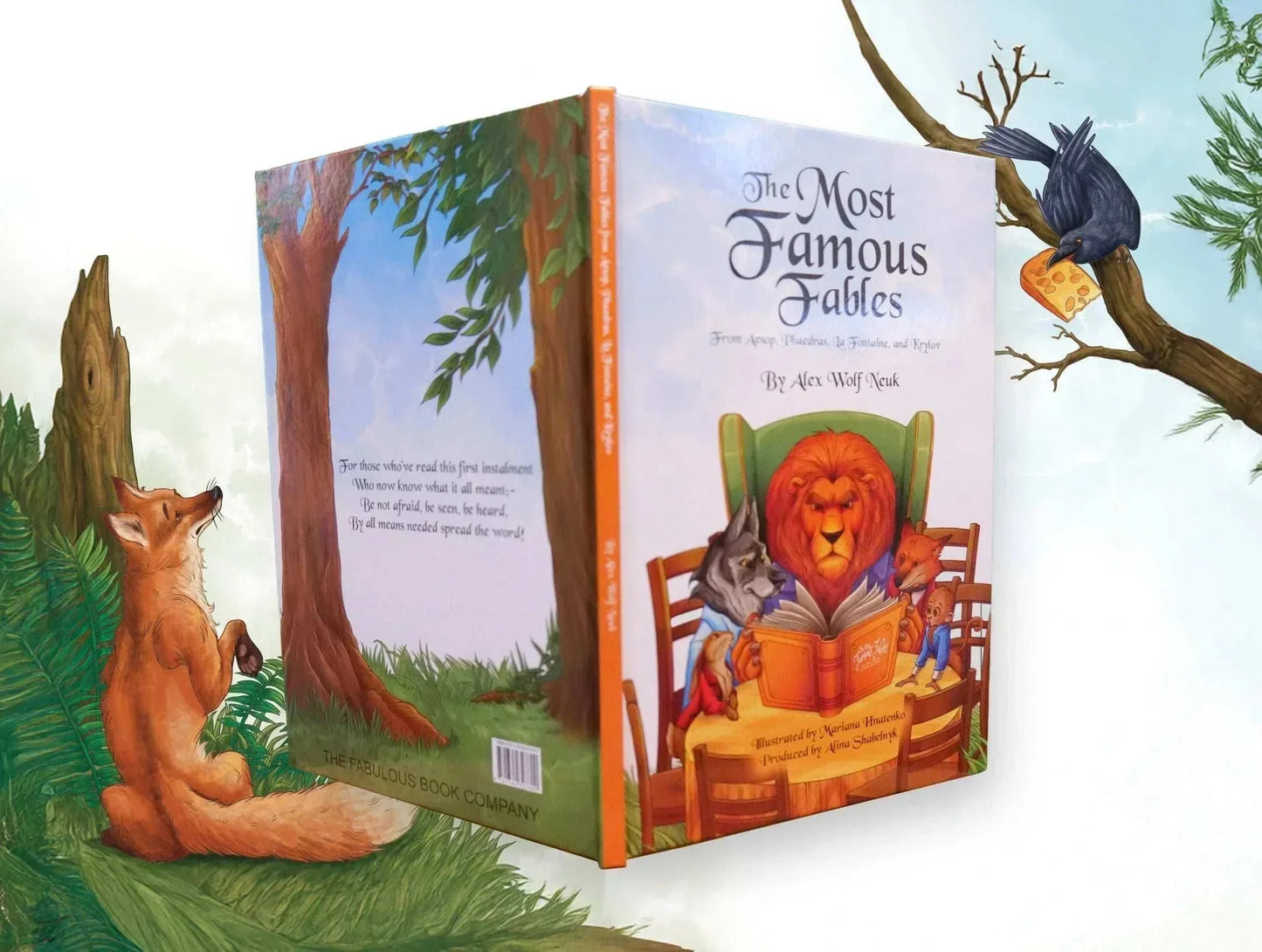
The Most Famous Fables: A Literary Review
Professor John Sena of Ohio State University reviews The Most Famous Fables by Alex Wolf Neuk — a vibrant, witty retelling of classic fables from Aesop, Phaedrus, La Fontaine, and Krylov, brought to life with stunning illustrations and timeless wisdom.
By John Sena, Ohio State University
Fables are truly fabulous - bursting with wit, wisdom, and the sheer joy of storytelling. They amuse with clever twists, spark curiosity, and impart age-old lessons that hold meaning across generations. And what’s more? They achieve all this through the rhythmic beauty of poetry.
In The Most Famous Fables, Alex Wolf Neuk curates a rich collection of the most spirited and engaging fables from literary giants - Aesop, Phaedrus, La Fontaine, and Krylov - breathing fresh life into them with a modern voice. His retellings shine with sharp satire, lively humor, and playful banter, making ancient wisdom feel strikingly relevant. Though these fables are fictional, they mirror the complexities of human nature - our ambitions, fears, vanities, and desires. As Wolf Neuk eloquently puts it:
"Ass, goat, kangaroo, and possum,
Though not a human, is a person,
Endowed with feelings, thoughts, and souls,
Ambitions, aspirations, goals."
Through these expressive, animated creatures, we see reflections of ourselves - flawed yet striving, foolish yet hopeful, wise yet often misguided.
Yet, for all their moral underpinnings, these fables never feel forced. Wolf Neuk remains faithful to the genre’s tradition of offering ethical insights but delivers them with a light and graceful touch - never imposing, never didactic. These stories are not just for children; they are for anyone who enjoys wit, irony, and timeless truths wrapped in enchanting storytelling.
Take, for example, The Ass and the Nightingale, reminiscent of John Keats’ Ode to a Nightingale. The nightingale’s enchanting song is wasted on an unappreciative ass who prefers the harsh crowing of a rooster. Naturally, the nightingale departs in search of an audience with better taste. In The Frog and the Ox, a foolish frog learns - too late - that arrogance often leads to downfall. The Cricket and the Ant revel in the present, blind to the consequences of ignoring the future, while The Lumberjack and Death suggests that even in hardship, meaning can be found. The Scapegoat tells of a plague that spreads through the animal kingdom. Rather than taking responsibility, each creature justifies its own selfish behavior - until they conveniently pin the blame on a scapegoat.
A defining feature of The Most Famous Fables is its breathtaking illustrations, crafted by two Ukrainian artists. Their artwork alone makes this book a treasure. Each page brims with color and imagination, the illustrations pulsing with energy, bringing the stories to life with a vibrancy rarely seen - even in beloved classics like Mother Hubbard. These visuals are not mere embellishments; they are an essential part of the storytelling, enriching the humor, emotion, and depth of each tale.
Alex Wolf Neuk’s collection is a brilliant fusion of humor, wisdom, and timeless storytelling. It proudly upholds the grand tradition of fables, making it both a cherished keepsake and a sheer delight for readers of all ages.
Professor John Sena
Ohio State University